

Pilot Overview
This case study documents how a private golf course pond within a residential community responded to a structured biological stabilization approach over five weeks. Using Pondeez™ Biological Pond Stabilizer packets dosed by its surface area measured by satellite, the project was guided by a water quality engineer with over two decades of experience and documented through dated progression images.

Pilot Snapshot
A quick view of the pond, dosing basis, and treatment structure used during this 5-week pilot.

Pond Type: Private golf course pond within a residential community
Surface Area: 0.17 acres
Product Used: Pondeez™ Biological Pond Stabilizer packets
Sizing Basis: Satellite-measured surface area
Application Rate: 2 packets per treatment
Pilot Length: 5 weeks
Treatment Structure: 4 treatments + final observation
Aeration Present: No
Initial Conditions Observed: Surface algae coverage, visible organic loading, stagnant appearance, poor visual condition, and recurring late summer decline

Starting Condition
At the start of the pilot, the pond showed visible signs of biological imbalance, including surface algae coverage, stagnant appearance, recurring late summer decline, and signs of organic loading. No aeration was present, and the goal was not a one-time cosmetic correction.
Instead, the pilot was designed to observe how a structured biological treatment sequence could influence pond progression over time. The focus was on measured dosing, repeated application, and visible field observation across the full treatment window.
How The Pondeez Method™ Was Applied
The Pondeez Method™ is built around a structured biological approach to pond improvement. Rather than reacting only to visible algae, the method focuses on the broader cycle driving pond decline: nutrient pressure, organic accumulation, seasonal stress, and reduced biological balance. This pilot was aligned to the five phases of that framework.
Phase 1 - Assess
The pond’s visible condition was reviewed based on algae coverage, stagnant appearance, recurring seasonal decline, and signs of organic loading. Surface area was measured to establish a structured treatment basis rather than relying on guesswork.
Phase 2 - Activate Biology
A structured treatment sequence was initiated using Pondeez™ Biological Pond Stabilizer packets. The goal was to begin supporting beneficial biological activity through a measured, repeatable approach matched to pond size.
Phase 3 - Reduce Nutrients
As treatment progressed, visible algae dieback and clearing suggested that the pond was beginning to shift away from the recurring surface-growth cycle that often defines late-summer decline.
Phase 4 - Stabilize
By the end of the pilot window, the pond showed a cleaner and more stable surface appearance, with more open water and improved visual condition compared with the starting point.
Phase 5 - Maintain
Although this case was documented as a 5-week pilot with 4 treatments, the long-term implication is clear: once visible stabilization begins, seasonal maintenance treatments help support that condition and reduce the chance of the cycle restarting.


Mid-Pilot Improvement
By the midpoint of the pilot, visible changes had begun to emerge across the pond’s surface. Surface algae coverage was starting to break apart, and open-water areas had begun to reappear across the pond.
The pond was still clearly in transition at this stage, but the stagnant appearance observed at the start of the pilot had begun to ease. Rather than a finished result, this phase reflected early visible progression as the structured treatment sequence continued.

One week later, the pond showed continued visual progression.
Clearing Phase
By the later stage of the pilot, the pond was showing more open water and a noticeably cleaner surface appearance than earlier in the treatment sequence. Areas of surface coverage had continued to break apart, and the pond was visibly moving away from the heavy, stagnant condition seen at the start of the pilot.
The pond was still progressing at this stage, but the overall surface condition was noticeably improved compared with earlier points in the pilot. This phase showed a clearer transition away from the heavy, stagnant appearance seen at the start and toward a more open and stable surface condition.
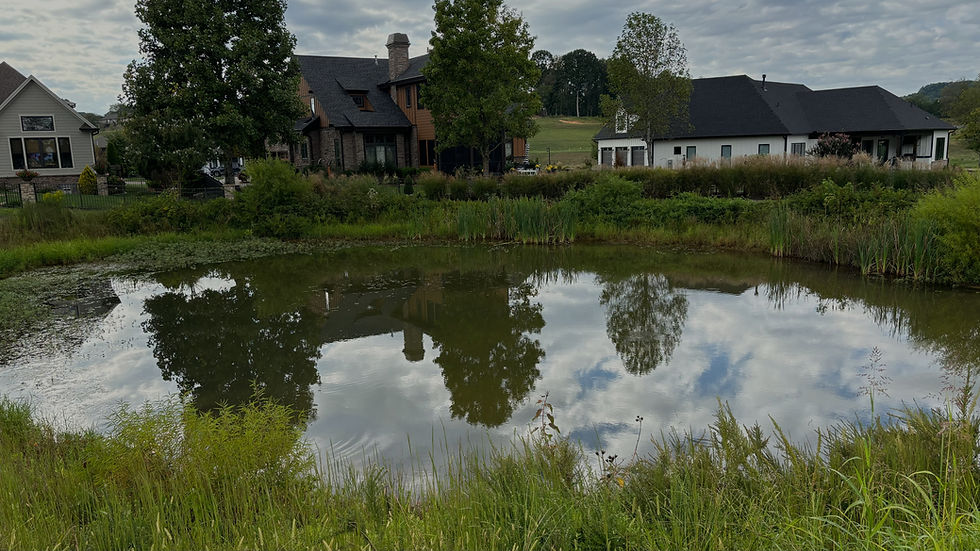
At the final observation stage, the pond showed its clearest condition of the pilot.
Final Observation
One week after the fourth treatment, the pond showed a cleaner and more stable appearance than at the start of the pilot. Open-water areas were more fully established, and visible surface coverage had been reduced compared with earlier stages of the treatment sequence.
While this pilot was limited to visible field observation, the final image showed clear progression from the starting condition. The pond’s overall appearance suggested movement away from recurring late-summer decline and towards a more stable surface condition.
Pilot Summary
This 5-week pilot demonstrated how a structured biological treatment sequence can visibly shift pond condition over time. Across four treatments and a final post-treatment observation, the pond progressed from heavy surface coverage and stagnant appearance toward a cleaner and more stable condition.
While this case study was limited to visible field observation, the pilot still reflected the structure behind The Pondeez Method™. The pond was assessed, treatment was based on measured pond size, and applications were repeated consistently to support a more stable pond condition.
For pond owners, communities, and golf course properties facing recurring surface algae and visible organic loading, this pilot reinforces an important point: lasting improvement is more likely to come from a structured biological approach than from one-time reactive treatment.
